Expanding the Clinical Eye: Seeing Across All Dimensions
Abstract
Facial Asymmetry: What are the Limits?
Facial asymmetry can be caused by various factors, and according to its etiology, severity may vary, and therefore treatment can be orthodontic only, or evolve to a surgical treatment. Investigators have tried to classify, characterize and measure asymmetry, but subjective aspects of its perception render the assessment more difficult. The relationship between facial attractiveness and slight facial asymmetries seems relevant for clinicians dealing with dental-facial problems. Nonetheless, the point where facial asymmetry becomes more clearly noticeable is not well defined, proving to be difficult to tell when an asymmetry really starts to become socially apparent. The purpose of this presentation is to describe how facial asymmetry can be currently treated, and to discuss the current knowledge on perception of facial asymmetry and how this should be approached in daily practice.
Game Changers in Open Bite Treatment
Open bite treatments are challenging due to its high rate of relapse. The literature presents many researches on this subject, but with controversial information. There are disagreements on the definition of open bite, its etiology and types of treatment. Possibly, the lack of consensus on the etiology of the anterior open bite may have led to different types of treatment and can be the explanation for the high level of relapse of this malocclusion. Function has a primary role in open bite stability, but other factors are of utmost importance to achieve an adequate and esthetic occlusion. With this in mind, the purpose of this lecture is to discuss how dental, skeletal and functional aspects should be considered in treatment planning, as well as the impact of different types of orthodontic appliances on clinical results.
Deep Bite: Much Beneath the Surface
Deep bite is an excessive overlap of incisors and should be treated in cases with gingival impingement or with long incisor guidance, that can lead to incisor wear. It is multifactorial in nature and can be associated to a decreased mandibular angle, incisor extrusion and/or posterior underdevelopment. Posterior tooth wear or erosion can also lead to deep bite due to loss of occlusal vertical dimension, mandibular counterclockwise rotation, and bite deepening. Many treatment approaches are available, which may include incisor intrusion, molar and premolar extrusion or posterior prosthodontic build ups. Aesthetic and functional aspects will determine which treatment approach to use and should be considered in treatment planning, most specifically upper incisor display at rest and occlusal vertical dimension. To illustrate and discuss different treatment approaches a series of cases are presented, pointing out important diagnostic criteria to define where and how deep bite should be treated.
Speakers
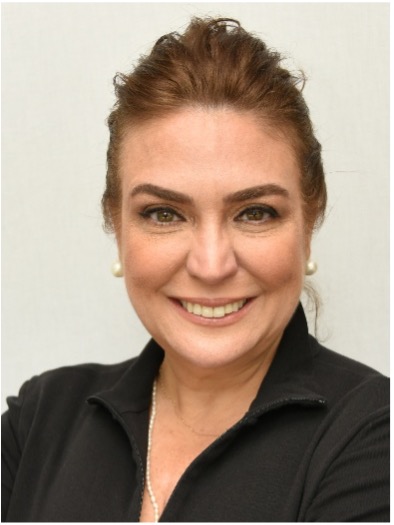
Professor Flavia Artese
Education
| 1992 | Dentistry, Federal University of Rio de Janeiro, Brazil |
| 1993 | Master of Science (MSc) in Orthodontics, Federal University of Rio de Janeiro, Brazil |
| 1998 | PhD in Orthodontics, Federal University of Rio de Janeiro, Brazil |
| 2006 | Diplomate of the Brazilian Board of Orthodontics |
Professional Experience
| 1993 – Present | Private practice in Rio de Janeiro |
| 1995 – 1996 | Visiting Scholar, Department of Orthodontics, University of Washington, USA |
| 1999 – Present | Chair of the Orthodontic Program, Rio de Janeiro State University |
| 2014 – 2018 | President of the Brazilian Association of Orthodontics |
| 2018 – Present | Active member of the Angle Midwest Society |
| 2025 | Chair of the 10th International Orthodontic Congress of the World Federation of Orthodontists (WFO) |
| Editor-in-Chief, Dental Press Journal of Orthodontics | |
| Present | - Chair of the Orthodontic Program, Rio de Janeiro State University - Secretary of the Scientific Commission, Angle Midwest Society - International Ambassador for the American Association of Orthodontists (representing Brazil) |